F1 Betting Guide 2026 – How to Bet on Formula 1
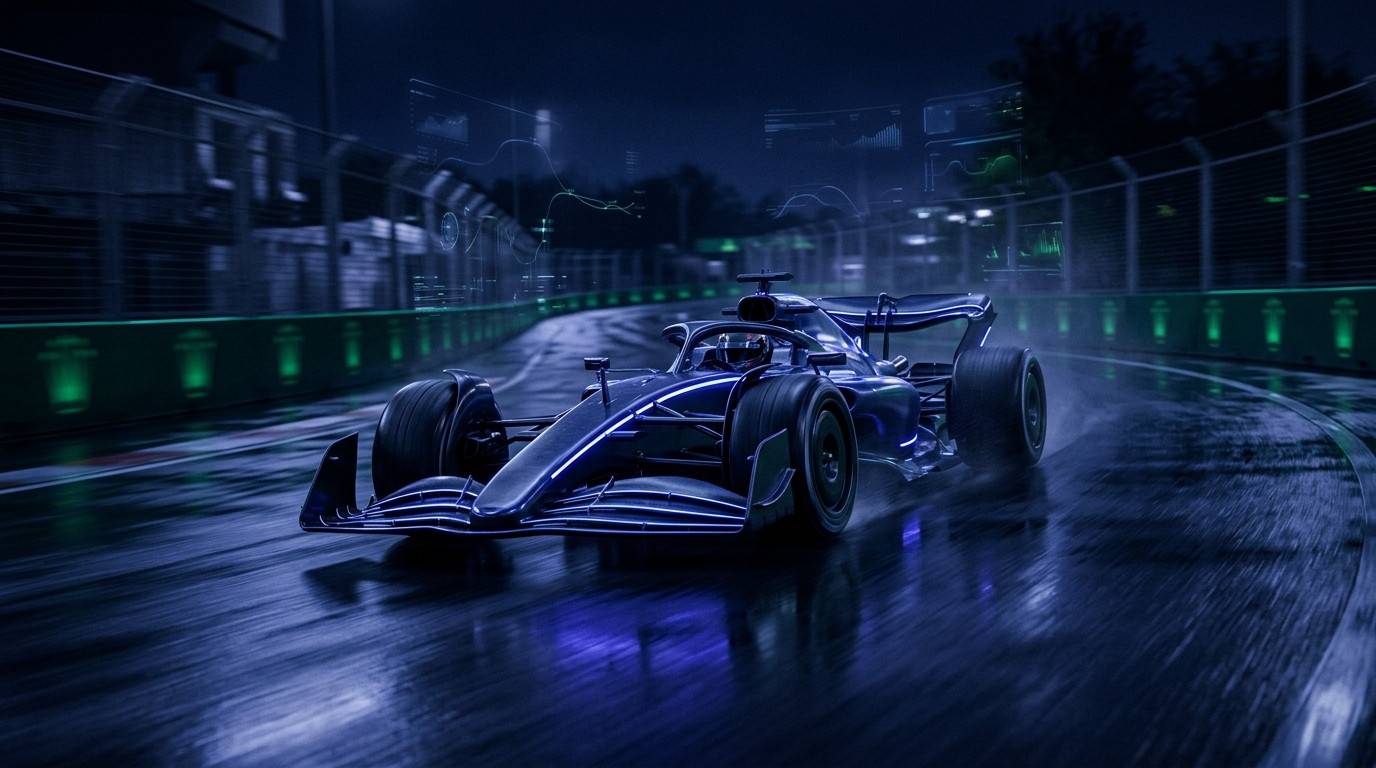
A New Era for F1 Betting
The 2026 Formula 1 season represents the most significant regulation reset the sport has seen in over a decade. New power unit rules, active aerodynamics, and engine supplier changes have reshuffled the competitive order in ways that pre-season testing can only hint at. For bettors, this is the most valuable type of season — one where the market is pricing off reputation and testing footage rather than actual race data, and where the smart money can find edges that evaporate once the season settles.
F1 Betting Markets Explained
Race winner is the flagship market but carries heavy juice on favorites. When Mercedes looked dominant during pre-season testing in Bahrain, George Russell's race winner odds shortened to the point where the value disappeared for all but the most confident bettors. The lesson: in F1, the favorite wins roughly 35-45% of races in a competitive season — laying -200 or more on a favorite with that win rate is negative expected value over a full season.
Podium finish (top 3) is where sharp F1 bettors focus most of their energy. The analysis is identical to race winner — identify which cars have the pace — but the margin for error is dramatically wider. Your pick doesn't need to beat everyone, just finish in the top three. In a season where four teams are competitive (Mercedes, Ferrari, McLaren, Red Bull this year), eight drivers have realistic podium chances at most circuits. Pricing across those eight is where value emerges.
Fastest lap is a unique market that correlates more with strategy than raw pace. Teams often pit a driver for fresh soft tires in the final laps specifically to steal the fastest lap bonus point. The fastest lap went to a driver not on the podium in a significant portion of recent seasons. It is almost a separate mini-market unconnected to the race outcome — look at which teams prioritize it and which drivers get the late pit stop.
Constructor points finish asks which team scores more at a specific race. This is valuable when one team has a clearly faster car but one of their drivers is inconsistent or penalty-prone. Head-to-head matchups between teammates are among the most predictable F1 markets because they strip out the car variable entirely — purely driver vs driver in identical machinery.
Championship futures — WDC and WCC outrights — offer the best value window right now, early in the season. As the competitive order clarifies after 4-5 races, prices compress. Sprint race weekends (several on the 2026 calendar) create additional betting markets with even less efficient pricing because the sample size for sprint results is tiny and books have limited data to calibrate against.
Qualifying markets deserve special attention because qualifying performance is the single strongest predictor in F1. The correlation between grid position and finishing position is higher in Formula 1 than in virtually any other sport. Pole position bets, top-3 qualifier, and Q1/Q2 elimination markets are all highly modelable using practice session data. For AI-generated qualifying and race predictions updated each weekend, check out our F1 predictions hub.
What the 2026 Regulations Mean for Bettors
The new power unit formula splits energy roughly 50/50 between internal combustion and electrical power — a massive shift from the previous generation's 60/40 split. Active aerodynamics, including adjustable front and rear wings, change how cars generate downforce fundamentally. Cars are smaller and lighter, affecting overtaking dynamics and tire degradation in ways even the teams are still learning.
The engine supplier map matters for understanding the competitive landscape. Mercedes powers its works team plus McLaren, Williams, and Alpine — making the Mercedes power unit the most widely used on the grid. Ferrari supplies its works team, Haas, and the new Cadillac entry. Red Bull has partnered with Ford for its own unit, also going to Racing Bulls. Audi enters as a full works manufacturer. Honda powers Aston Martin, whose pre-season testing raised serious reliability concerns.
Pre-season testing painted a preliminary picture: Mercedes looked the strongest overall, Ferrari showed impressive raw speed, McLaren was within striking distance, and Red Bull appeared capable but less dominant than recent years. The midfield had surprises — Alpine's move to Mercedes power seemed to help, while Aston Martin's Honda partnership struggled.
The crucial insight for bettors: regulation changes historically produce the largest pricing inefficiencies of any F1 season. The market prices off brand reputation and testing impressions, but testing correlates imperfectly with race competitiveness. Teams run different fuel loads, engine modes, and tire compounds. The first 5-6 races are where the real competitive order reveals itself, and bettors who wait for that data then bet aggressively when the market hasn't caught up tend to outperform those who bet on pre-season hype.
Key Factors for Race-by-Race Predictions
Practice session data is your earliest edge each weekend. Friday long runs on high fuel are the most predictive data point for race pace — more than qualifying simulation times. The gap between single-lap pace and long-run pace tells you which teams are sacrificing race performance for grid position.
Track characteristics create systematic patterns. Street circuits (Monaco, Singapore, Miami, Las Vegas) reduce the advantage of raw car speed because overtaking is nearly impossible — qualifying position matters even more, and upsets become more likely. High-speed circuits like Monza, Spa, and Jeddah amplify power unit differences. Critically, DRS zone layouts vary by circuit — tracks with multiple long DRS zones (like Bahrain and Jeddah) make overtaking easier and reduce the penalty for a poor qualifying, while tracks with short or poorly positioned DRS zones (like Monaco and Hungary) make grid position almost deterministic.
Weather is the single most powerful upset variable in F1. Rain races produce an outsized number of shock results because they equalize car performance and amplify driver skill. When the forecast shows rain for a race weekend, outsider value in podium and race winner markets spikes. Check the forecast on Thursday before the market fully adjusts to wet expectations.
Team strategy patterns are more consistent than people realize. Some teams systematically favor aggressive undercut strategies while others prefer the overcut or react to rivals. These tendencies are trackable and create an informational edge. Grid penalties from power unit component changes are assigned before the weekend and compound in unpredictable ways — a fast car starting 15th faces an entirely different race than starting 3rd. For weekend-specific AI predictions that factor in practice data and grid penalties, visit our F1 predictions page.
Strategies That Consistently Produce Value
Podium finish bets over race winner bets, consistently and across the entire season. The edge is mathematical: the probability of finishing top 3 when you have a top-4 car is dramatically higher than winning outright, but odds don't always reflect that gap proportionally. This is especially true at circuits with easy overtaking where the top teams can recover from poor qualifying.
Wet-weather race targeting is one of the most reliable edges in F1 betting. When rain is forecast, check the market before the weekend, then watch how odds shift after wet practice sessions. If the market overcorrects — a midfield driver sets fastest time in rain-soaked FP2 and their race odds collapse — that's often where value swings back to frontrunners who simply weren't pushing in practice.
Fading overperformers from the previous weekend is a regression-to-mean strategy that works because F1 narratives move faster than fundamentals. A midfield driver who qualifies 4th due to lucky red flag timing then finishes 5th becomes next week's "rising star" in the public market. Their odds shorten beyond their actual performance level. Sharp bettors recognize and fade narrative inflation.
Constructor head-to-head bets are more predictable than individual driver outcomes because they smooth out single-driver variance. One puncture, one botched pit stop, one first-lap collision — these random events devastate individual driver bets but affect constructor bets less because the team has a second car.
Combining AI with Live Session Data
AI models process qualifying times, race pace, historical circuit data, and reliability records to generate probability estimates. F1's limitation is sample size — 24 races per season versus 1,200+ NBA games. Model uncertainty is inherently higher and confidence intervals wider.
The best approach treats AI output as a baseline that gets updated with live evidence. If the AI gives Russell a 30% podium probability based on historical data, but he tops every practice session by four-tenths, the live evidence supports moving that probability higher. Conversely, if a car shows unexpected degradation in Friday practice, adjust the baseline downward.
F1 prediction is as much art as science. The AI provides the science — processed data, historical patterns, probability estimates. Your job is the art — reading practice sessions, understanding team dynamics, and knowing when live evidence is strong enough to override the model's baseline. Our betting calculator can help you convert those adjusted probabilities into implied odds and identify where the sportsbook price offers value.
The Bottom Line
The 2026 season is the most unpredictable F1 campaign in years, with genuine uncertainty about the competitive order beyond the first few races. The new regulations, engine partnerships, and new entrants have created a season where the market will be wrong more often than usual. For bettors willing to watch practice sessions, process qualifying data, and combine AI baselines with live evidence — this is the most valuable F1 betting season in recent memory.